


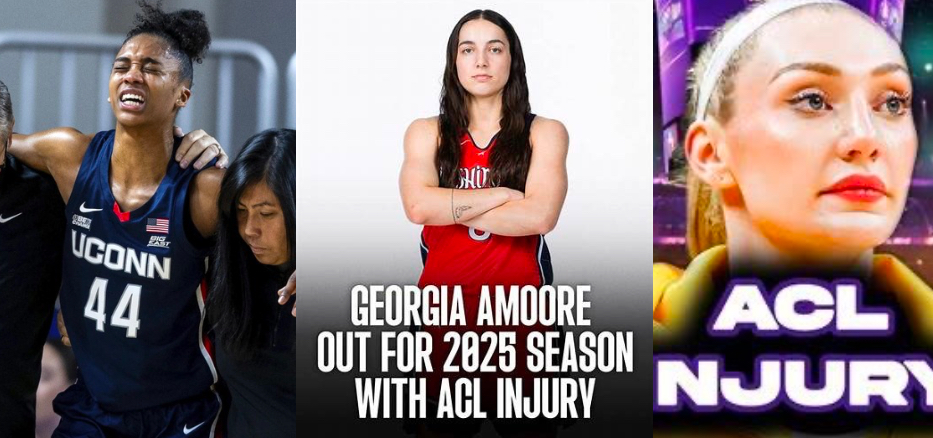
Recently, across women’s athletics, female athletes have been experiencing ACL tears, or more formally known as, a tear of the Anterior Cruciate Ligament. This is an injury that can take at least one year to heal and creating higher injury risk for years to come.
If you follow the WNBA, you’ll notice the increasing number of athletes on injury leave because of the severity of this injury. Rookie Georgia Amoore received a warm welcome to the league, obtaining the injury just within a few short weeks of being drafted to the Washington Mystics. Nika Mühl, the secretary of defense, and Seattle Storm point guard, has been on the bench for nearly a season and a half, and is just now making her return to the court.
This injury is especially crucial to rookies, as it is their first chance to show their skills in professional basketball. Rookie Aubrey Griffin has been out since the end of her championship season at the University of Connecticut and has not yet been able to make her debut on championship leading team, the Minnesota Lynx.
Women are 2 to 8 times more likely to tear their ACL then men are. Women’s joints, including the knee generally have more looseness and range of motion than men’s, making it more prone to injury. Women also often have less muscle mass around the knee, contributing to more instability, which can lead to a ligament tear if the ligament gets overstretched.
This injury is becoming more, and more prominent in women’s professional sports due to factors such as decreased roster sizes, such as in the WNBA where the max size is 12 players per team.
Professional sports teams and management should consider the risk of injury when factoring in the team sizes and how playing dynamics can be changed due to the constant lineup changes.
 Ashley Holloman: Portfolio